

What if the most effective way to calm your flared, angry skin isn't found in a sterile laboratory, but inside the golden, aromatic walls of a beehive? With one in three Australians experiencing eczema at some stage in their lives according to the Eczema Association of Australasia, the search for relief often feels like an endless cycle of trial and error. You've likely grown tired of the constant itching and the underlying fear that harsh, pharmaceutical creams might be doing more harm than good to your delicate skin barrier. It's exhausting to wake up to redness when you just want to feel comfortable in your own skin.
We believe there's a better way to find peace. By turning to the wisdom of our industrious bee partners, you'll discover how a handcrafted propolis cream for eczema can act as a velvety, protective shield for your body. This natural guide explores how this botanical resin, gathered from the wild Australian bush, works to restore hydration and soothe irritation. We'll walk through the simple daily rituals that help repair your skin and explain why these pure, raw ingredients are the gentle alternative you've been searching for.
Key Takeaways
- Learn how to break the distressing itch-scratch cycle by repairing your skin’s natural barrier with the gentle, protective wisdom of the hive.
- Discover the science behind antimicrobial flavonoids that allow propolis to act as a golden, disinfecting shield for delicate or broken skin.
- Explore why choosing a botanical-first propolis cream for eczema provides a more sustainable, nourishing ritual than harsh synthetic alternatives.
- Master the mindful application steps and essential patch-testing tips to ensure your sensitive skin fully absorbs every drop of nature’s healing moisture.
- Understand the artisanal difference of small-batch, hand-poured skincare that treats Australian bees as partners in your journey to lasting skin comfort.
Understanding Eczema and the Role of Propolis Cream
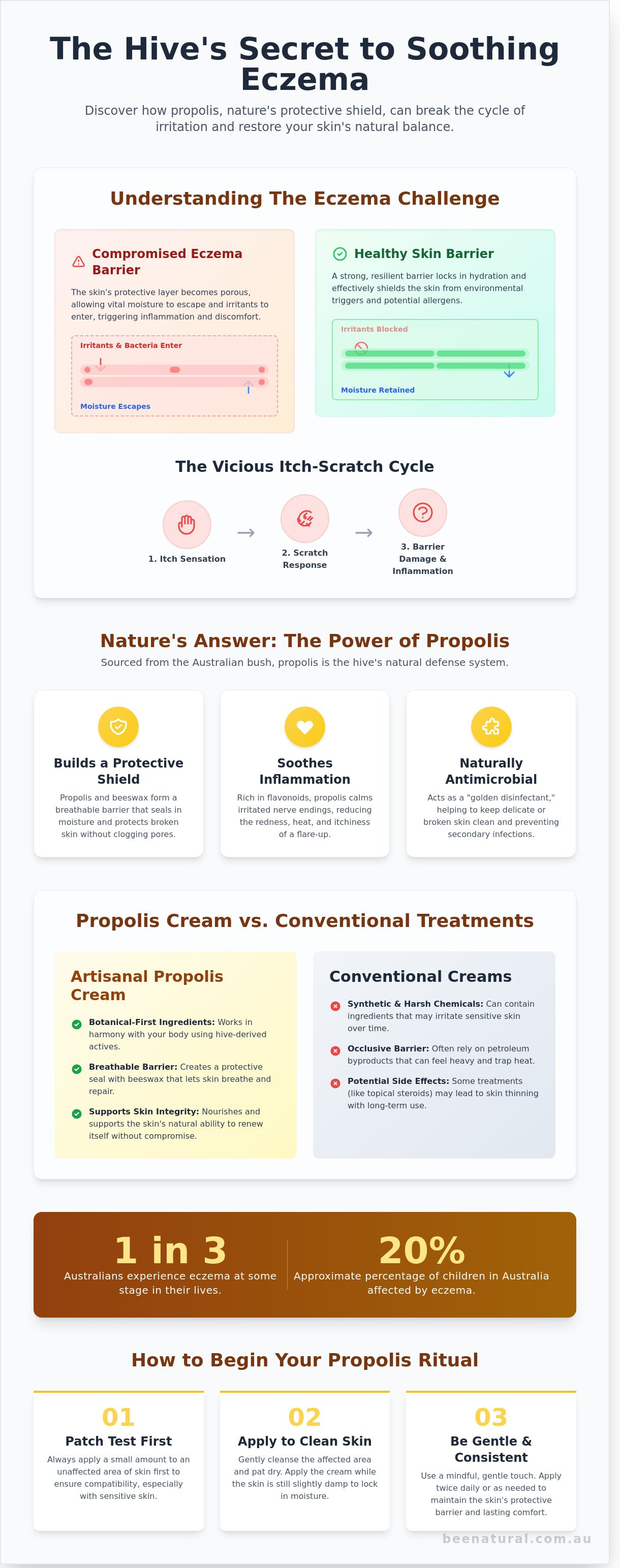
Living with eczema often feels like an endless cycle of discomfort. Your skin's natural barrier, which should act as a sturdy shield, becomes compromised and porous. Instead of holding onto vital hydration, it lets moisture evaporate into the air. This leaves the surface vulnerable to every passing irritant. When the skin is this thirsty and exposed, the "itch-scratch-infection" cycle takes hold. You scratch to find relief, but this only creates tiny tears that invite bacteria to settle in. Many standard moisturisers fail here because they lack the protective strength to truly seal those gaps. This is where propolis cream for eczema offers a different, more holistic path to comfort.
In our apiaries, we see how the bees protect their own homes using a remarkable substance called propolis. Often referred to as "bee glue," this resinous mixture is gathered from botanical buds and sap. The bees use it to sterilise the hive and seal out the elements. By bringing this same protective wisdom to your skincare routine, you provide your skin with a gentle, non-steroidal layer of support. It doesn't just sit on the surface; it works in harmony with your body to encourage a sense of calm and resilience. It's a soothing alternative for those who prefer the purity of the hive over synthetic chemicals.
The Anatomy of an Eczema Flare-Up
An eczema flare-up is rarely a random event. In Australia, our skin faces unique challenges from harsh UV rays to seasonal pollens. These environmental triggers cause the skin to become reactive and inflamed. Recent data from the Australasian Society of Clinical Immunology and Allergy (ASCIA) suggests that eczema affects roughly 20 percent of children and a significant number of adults across the country. A healthy skin microbiome is essential for keeping these flares at bay. When the balance of "good" bacteria is disrupted, the skin loses its ability to defend itself. Creating a protective barrier is the first and most vital step in breaking the cycle and restoring peace to sensitive skin.
What Makes Propolis Unique for Skin?
Propolis is a complex gift from the hive. Scientists have identified more than 300 natural compounds within its structure, including various vitamins and minerals. The bioactive properties of propolis are what make it so effective at keeping the bee colony disease-free. While raw resin is hard and sticky, a carefully handcrafted propolis cream for eczema blends these potent extracts into a velvety, easy-to-apply base. Unlike heavy ointments that can feel greasy, a well-formulated cream absorbs beautifully while still providing that essential "seal." It’s a testament to the slow, artisanal process of working with nature rather than against it. By choosing these hive-derived solutions, you're supporting your skin with ingredients that have been perfected over millions of years.
The Science of the Hive: How Propolis Supports Skin Repair
Propolis is often called "bee glue," but for those of us living with the sting of sensitive skin, it's a golden gift from our industrious partners. This resinous substance, gathered by bees from Australian botanical sources, serves as the hive's primary defense against intruders and infection. When we blend this into a propolis cream for eczema, we're essentially sharing the hive's own immune system with your skin. Unlike some conventional eczema treatments that can lead to skin thinning over time, hive-based ingredients support the dermis's natural ability to renew itself without compromising its structural integrity.
Anti-Inflammatory Action for Redness
The flare-up of an eczema patch often brings a literal heat to the skin, a pulsing discomfort that demands relief. Propolis works to quiet this internal fire by calming the irritated nerve endings that signal pain and itchiness. Flavonoids are the key antioxidants in propolis that reduce skin stress. By gently hushing these inflammatory responses, the skin can finally rest and begin the slow, steady work of repair. It feels like a cooling, velvety hug for your most vulnerable areas, providing a sense of calm that's often hard to find during a breakout.
Building a Breathable Protective Barrier
Many commercial moisturisers rely on mineral oils or petroleum byproducts. These can feel heavy and often suffocate the skin, trapping heat and potentially worsening a flare-up. In contrast, our handcrafted blends use a combination of propolis and beeswax to create a breathable shield. This barrier is vital for the skin's recovery process, especially when the surface has been compromised. Propolis acts as a natural disinfectant for broken skin caused by scratching, which is essential for preventing the complications often associated with chronic irritation. This protective layer serves several purposes:
- It seals in deep moisture while still allowing the skin to breathe and regulate its temperature naturally.
- The antimicrobial properties help protect against secondary infections, which affect roughly 30 percent of people living with atopic dermatitis.
- It creates a physical buffer against environmental triggers like dust and pollen.
By combining propolis with raw honey and pure beeswax, we create a synergistic effect that mirrors the harmony of the hive itself. This trio works in unison to nourish the skin without the harshness of synthetic chemicals or artificial fragrances. If you're looking for a way to support your skin's journey back to health, our range of nourishing balms offers a gentle, sustainable path forward. Each jar is a testament to the healing power of the Australian landscape and the quiet, persistent wisdom of the bees who call it home.
Comparing Propolis Cream to Conventional Eczema Treatments
Australians are increasingly turning away from pharmaceutical-heavy routines in favor of botanical-first approaches. This shift reflects a desire for a long-term, sustainable skincare ritual rather than a synthetic quick fix that might cause trouble later. Many eczema sufferers now hunt for clean labels that feature fewer than ten ingredients. They're avoiding the hidden fragrances and parabens that often lurk in mass-produced tubes. A high-quality propolis cream for eczema fits this back-to-basics philosophy perfectly. It offers a transparent, honest way to care for your body while respecting the environment and the delicate balance of your skin.
Propolis vs. Topical Steroids
Steroids serve a purpose during intense flare-ups, but they aren't a long-term solution for daily life. Many of our customers speak of steroid fatigue, where the skin becomes thin or reliant on pharmaceutical intervention after prolonged use. Propolis offers a gentle, supportive alternative for daily maintenance. Scientific research highlights the therapeutic benefits of bee products in skin care, noting how these natural resins provide anti-inflammatory support without the harsh side effects of synthetics.
By incorporating a propolis cream for eczema into your morning and evening routine, you create a preventative barrier. It nurtures the skin between flares, keeping the moisture locked in and the irritants out. It's a rhythmic simplicity that works with your body's natural healing rhythm. Our little partners, the bees, provide us with a resin that is far more complex and nurturing than any lab-made emollient. This approach prioritizes the health of the skin barrier over time, leading to a more resilient and calm complexion.
Artisanal vs. Mass-Market Skincare
Mass-market creams are often built for the shelf, not for the skin. They frequently contain harsh preservatives to ensure a three-year lifespan in a warehouse. These chemicals can be devastating for a compromised skin barrier. In contrast, small-batch, artisanal production preserves the delicate bioactive compounds our bees work so hard to create. When we hand-pour our batches here in Australia, we ensure the golden, aromatic qualities of the propolis remain intact.
This tactile process is the opposite of a cold factory line. If you're looking for a thicker, more concentrated consistency for targeted dry patches, you might also explore a propolis ointment for skin to complement your daily cream. Handcrafted products prioritize the living nature of ingredients, providing a velvety texture that mass-produced alternatives simply can't replicate. Choosing artisanal means you're supporting a slower, more intentional way of living that values quality and transparency above all else.
How to Safely Integrate Propolis into Your Skincare Routine
Welcoming a new botanical ally into your daily ritual requires a slow, mindful approach. Because our bees gather resins from diverse Australian flora, every jar of propolis cream for eczema carries a unique fingerprint of the bush. While these ingredients are gifts from the hive, your skin needs time to get acquainted with their potent, concentrated properties. It's best to start with a gentle introduction to ensure your moisture barrier feels supported rather than overwhelmed.
The 4-Step Application Ritual
Consistency is the heartbeat of natural healing. Following a rhythmic application process helps the active compounds penetrate deeper while keeping the skin's surface calm and protected. This ritual transforms a simple task into a moment of self-care.
- Cleanse gently: Start by washing away environmental stressors with a non-stripping honey skincare product. This maintains your natural pH balance while preparing the skin to receive nourishment.
- Seal in moisture: Don't dry your skin completely after washing. Applying your cream to slightly damp skin helps trap water molecules, creating a velvety hydration seal.
- Targeted layering: For extremely dry areas like elbows and knees, use a layering technique. Apply a thin layer, wait three minutes for absorption, and then apply a second coat to reinforce the barrier.
- Safety first: Patch testing on the inner wrist for 24 hours is the gold standard for safety.
Identifying High-Quality Propolis
The integrity of your propolis cream for eczema depends entirely on how the hive's "bee glue" was handled. Look for "raw propolis" or "propolis extract" on the label rather than vague "bee scent" additives. Authentic, minimally processed propolis has a distinct character. It should possess a rich, golden-to-amber hue and a deep, balsamic aroma that reminds you of a sun-drenched forest. If a product is stark white or lacks a natural scent, it has likely undergone heavy chemical refining that destroys the very flavonoids you're seeking.
The origin of the hive is just as critical as the extraction method. Australian propolis is highly regarded because our remote landscapes provide a clean environment for bees to forage. A 2020 study published in the journal Molecules confirmed that the chemical profile of propolis is a direct reflection of local flora. Sourcing from pristine Australian bushland ensures the final product is free from the industrial residues often found in more crowded global regions. You can explore our handcrafted range to see how we bottle this local purity for your skin's wellbeing.
For daily maintenance, a single application after your morning shower is usually enough to keep the skin supple. During acute irritation, you can increase this to three times daily. This responsive approach respects your skin's changing needs throughout the seasons and ensures you aren't over-applying when the skin is in a resting phase.
Choosing an Artisanal Propolis Cream for Lasting Relief
Bee Natural isn't a factory. It's a workshop where we've spent more than 30 years perfecting the art of hive-based care. Since we began our journey in 1992, our philosophy has centered on a simple truth: nature doesn't like to be rushed. We treat our bees as vital partners in everything we do, ensuring that every jar of propolis cream for eczema contains the purest raw ingredients. When you choose a cream made with local Australian beeswax and honey, you're choosing a product that respects the delicate balance of our ecosystem.
The difference is something you can feel the moment the cream touches your skin. Unlike mass-produced lotions that rely on water and synthetic fillers, our formulas are concentrated and rich. We source our ingredients from the unique flora of the Australian landscape, capturing the essence of the bush in every batch. This isn't just skincare; it's a connection to the earth and a celebration of the healing power found within the hive.
Hand-Poured with Intention
Our production process is slow by design. We hand-pour in small batches to protect the bio-active compounds within the propolis. Heat can often destroy the very enzymes that make hive products so effective, so we maintain a gentle temperature throughout. This careful approach creates a velvety, aromatic cream that feels fundamentally different from watery, store-bought alternatives. You'll notice the golden hue and the subtle scent of the Australian bush. It's a direct result of our commitment to the health of our local landscape and our refusal to use harsh synthetics. We believe the hive provides everything your skin needs to thrive without the need for chemical intervention.
A Gentle Promise for Your Skin
We haven't changed our core formulas since 1992 because they work. For over three decades, our community has shared stories of finding relief when nothing else seemed to help. These testimonials aren't just reviews. They're proof that nurturing, raw ingredients can make a real difference for those struggling with sensitive skin. We invite you to slow down and listen to what your skin is telling you. Choosing a propolis cream for eczema is more than a purchase. It's a calming ritual that invites you to treat your body with the same kindness we show our bees. Trust in the wisdom of the hive and experience the soothing embrace of ingredients that are as honest as the people who made them.
- Handcrafted in small batches since 1992
- Made with local Australian beeswax and honey
- Free from synthetic fragrances and harsh preservatives
- Deeply nourishing and protective for sensitive skin
Embrace the Healing Wisdom of the Hive
Finding relief for sensitive skin doesn't have to mean relying on harsh, synthetic chemicals. By choosing a high-quality propolis cream for eczema, you're tapping into a tradition of healing that dates back centuries. Our approach focuses on the simple, potent synergy of raw Australian propolis and pure beeswax to support your skin's natural repair process. Since 1992, we've remained committed to our artisanal roots. Each jar is hand-poured in small batches to ensure the living energy of the hive remains intact. You won't find any synthetic fragrances or hidden irritants here; just the honest, golden goodness of the Australian landscape. Transitioning to a botanical-led routine offers a gentle way to soothe irritation while respecting your body's delicate balance. It's time to let nature's most dedicated workers help restore your skin's velvety softness. Your journey toward calm, nourished skin begins with ingredients you can trust. Discover the Soothing Power of our Original Propolis Cream and feel the difference that 34 years of dedicated craftsmanship makes for your daily comfort.
Frequently Asked Questions
Is propolis cream safe for children with eczema?
Yes, propolis cream is generally safe for children over the age of 12 months. The Journal of Dietary Supplements published a 2021 study showing that propolis is well-tolerated in pediatric skin care formulations. You should always perform a small patch test on your child's inner arm first. We recommend waiting 24 hours to ensure their delicate skin stays calm and happy before applying it more broadly.
Can propolis cream cause an allergic reaction?
Yes, an allergic reaction is possible if you're sensitive to bee products or certain tree resins. Research published in Contact Dermatitis in 2018 suggests that between 1.2% and 6% of people may experience a skin sensitivity to propolis. If you have a known allergy to bees or pollen, it's best to avoid this product. Our propolis cream for eczema uses pure ingredients, but nature is powerful and deserves respect.
How often should I apply propolis cream to my eczema patches?
You should apply the cream two to three times daily to see the best results. Start with a thin layer in the morning and another before bed to protect your skin while you sleep. For intense flares, you can apply a small amount whenever the itching feels overwhelming. This rhythmic care helps maintain the skin's moisture barrier and keeps the botanical goodness working around the clock to soothe irritation.
What is the difference between propolis and honey for skin?
Propolis is a resinous "bee glue" used to seal the hive, while honey is a food source made from nectar. Propolis contains over 300 active compounds, including high concentrations of polyphenols that specifically target inflammation. While honey is a wonderful humectant for hydration, propolis acts as a protective shield. It provides a more robust antibacterial defense that's vital for healing broken skin and preventing secondary infections during a flare.
Will propolis cream stain my clothes or bedding?
Propolis can leave a faint golden tint on light fabrics because of its natural resins and balsams. To protect your bedding and clothes, wait about 10 minutes for the cream to fully sink into your skin. Once the velvety texture is absorbed, the risk of staining is much lower. We suggest using older cotton garments immediately after application if you're worried about your favorite linen or silk pieces.
Can I use propolis cream alongside my prescribed eczema medication?
You can typically use our propolis cream for eczema alongside other treatments, but you should check with your Australian GP first. Many people apply their medicated ointments first and then use our handcrafted cream as a protective top layer. This method helps lock in moisture and provides a soothing botanical barrier. Always wait 30 minutes between different applications to allow each product to work effectively without interference.
How long does it take to see results with propolis cream?
Most people notice a soothing sensation immediately, with visible redness reduction occurring within 48 to 72 hours. A 2019 study in Phytotherapy Research showed that consistent application leads to significant skin barrier repair within 14 days. Your skin's healing journey is a slow, natural process. Give the bees' hard work at least two weeks to truly transform the texture and health of your dry, itchy patches.
Is propolis cream effective for all types of dermatitis?
Propolis is effective for atopic, contact, and seborrheic dermatitis due to its broad antimicrobial properties. It's particularly useful because it targets Staphylococcus aureus, a bacteria present in 90% of eczema flares according to dermatological data. Whether your skin is reacting to an environmental irritant or a chronic internal condition, the resinous compounds help calm the storm. It provides a versatile, artisanal solution for various inflammatory skin concerns.